

Cloud adoption continues to accelerate across every industry vertical, but with convenience comes a new set of security responsibilities. Understanding where your cloud provider’s obligations end and yours begin is foundational to building a resilient cloud posture. Equally important is integrating security directly into the delivery pipeline—popularised as DevSecOps. This article demystifies the three primary cloud service models (IaaS, PaaS, SaaS) and shows how a DevSecOps approach embeds continuous guard‑rails.
Why Service Models Matter
Each cloud layer abstracts different pieces of the technology stack. The greater the abstraction, the more operational burden shifts to the provider—yet data protection, identities, and configuration hygiene always remain the customer’s duty. Misunderstanding this line leads to misconfigured storage buckets, exposed secrets, and supply‑chain breaches.
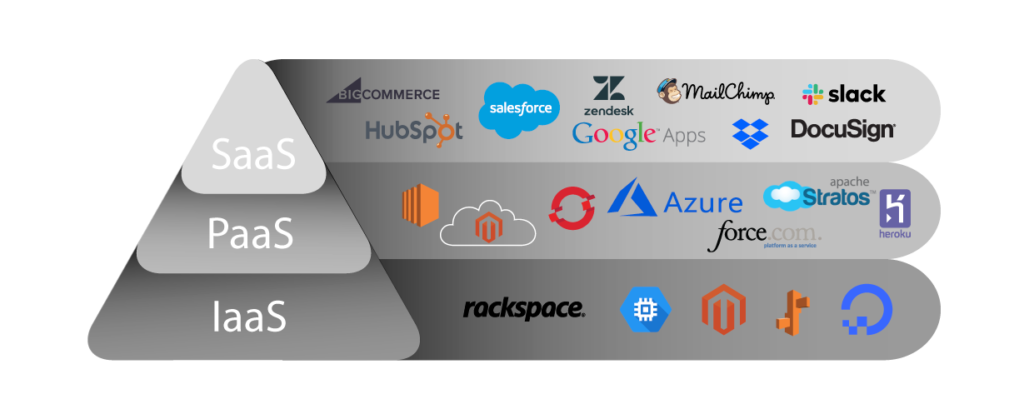
Infrastructure as a Service (IaaS) delivers raw compute, network, and storage building blocks. You patch the OS, harden network gates, and secure workload data.
Platform as a Service (PaaS) adds managed runtimes (databases, functions, app hosting) so you focus on code rather than patch cycles.
Software as a Service (SaaS) shifts almost everything to the vendor; you simply manage users, roles, and the sensitivity of content you upload.
The Shared Responsibility Reality Check
Major providers publish explicit matrices that spell out the division of labour—for example, AWS manages hypervisors and data‑centre security while customers lock down guest operating systems, IAM policies, and encryption keys.
Shifting Left with DevSecOps
Traditional “bolt‑on” security reviews don’t scale in agile release trains. DevSecOps infuses security tooling and culture into every stage of the CI/CD lifecycle. The result: vulnerabilities are eradicated minutes after introduction instead of weeks after production.
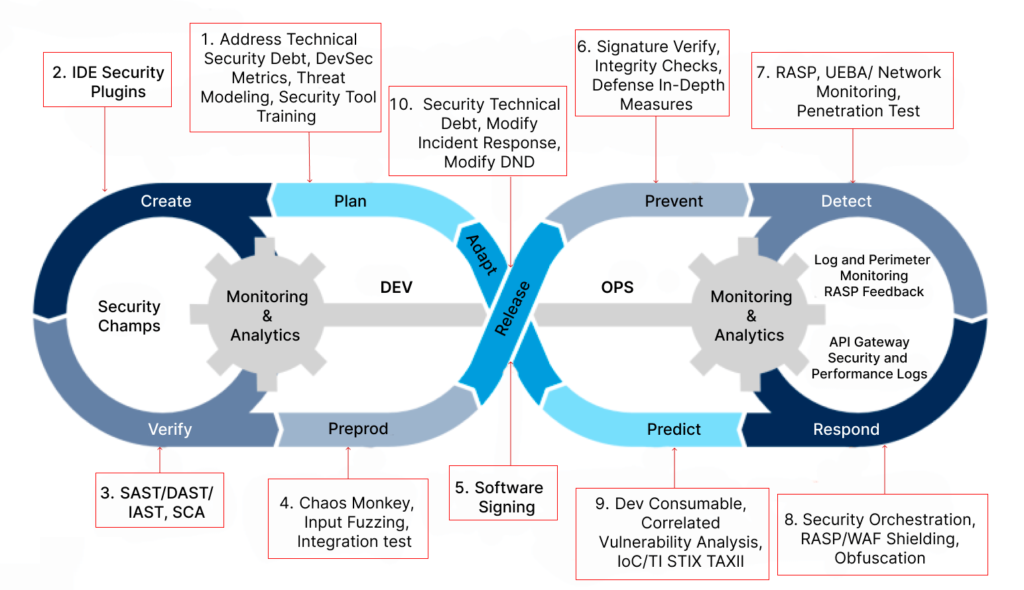
Automated Static Application Security Testing (SAST) and Software Composition Analysis (SCA) run on every merge request, flagging insecure coding patterns and vulnerable libraries early. Container images produced during the build stage undergo dependency and binary scans before being promoted to the artifact repository. Dynamic Application Security Testing (DAST) kicks off in ephemeral QA environments to uncover runtime flaws such as injection or unsafe deserialisation.
Choosing the Right Service Model
Selecting between IaaS, PaaS or SaaS is rarely a binary decision. Green‑field start‑ups might adopt a SaaS‑first mindset to minimise operational overhead, whereas enterprises with complex legacy workloads often maintain a hybrid mosaic. The sweet spot comes from aligning business drivers—speed, cost, control—with the compliance envelope you must satisfy. For example, storing card‑holder data under PCI‑DSS frequently tips the scales toward IaaS, where you retain granular auditability.
Regulatory & Industry Frameworks
The on‑prem‑to‑cloud shift does not absolve organisations from regulations. PCI‑DSS v4.0, HIPAA’s Security Rule and the EU’s GDPR all demand demonstrable control over data residency, encryption and incident response. Hyperscale providers give you SOC 1/2/3 and ISO 27017 attestations, but you still need to map those controls to your internal policies.
Where Tricognix Fits In
Our Cloud Security Assessment Service benchmarks your deployments against CIS Benchmarks, OWASP Top 10 risks and the NIST CSF. We then embed our advisory team within your sprint cadence to operationalise a DevSecOps pipeline like the one above, ensuring every layer ships hardened by default.
Key Takeaways
Cloud security is a shared journey. Mapping your stack to the right service model clarifies who secures what. Embedding DevSecOps practices guarantees guard‑rails grow with your codebase rather than lag behind it, letting you reap cloud agility without sacrificing control.
Practical Steps to Harden Your Cloud Footprint
- Automate enforcement — use policy‑as‑code engines (e.g., Open Policy Agent or HashiCorp Sentinel) so that every pull‑request spins up ephemeral test environments and fails the build if a network‑exposed S3 bucket or permissive security‑group rule is detected.
- Encrypt everywhere — enable TLS 1.2+ for all data‑in‑transit and configure provider‑managed keys (or bring‑your‑own‑key) for data‑at‑rest encryption in RDS, Blob storage, message queues, snapshots and even DNS zones.
- Adopt least privilege — design granular IAM roles with scoped‑down policies; outlaw the use of root or owner accounts for day‑to‑day operations; enforce MFA and conditional access.
- Instrument logging & monitoring — stream CloudTrail, VPC Flow Logs and Container Insights into a SIEM so anomalies (e.g., impossible travel logins, bursty data egress, container escape attempts) trigger real‑time alerts.
- Drill incident‑response runbooks — simulate credential leakage and ransomware attacks quarterly; measure meantime‑to‑contain (MTTC) and refine playbooks accordingly.
Further Reading & Resources
For deeper dives, explore the AWS Well‑Architected Security Pillar, Google’s Cloud Architecture Framework, and the DevSecOps Playbook released by the US DoD. Mapping these blueprints against your own threat model yields a bespoke, defensible roadmap.